Data Center Innovations in 2026: A Deep Dive

Data centers used to sit quietly in the background, treated as fixed infrastructure that supported the real work of the business. That view no longer fits. Today, the data center is closer to a living system, constantly responding to application demands, security threats, power constraints, bandwidth requirements, and the need for faster service delivery while maintaining solid network reliability. In today’s environment, every byte of data matters, and modern data centers are rigorously engineered to process massive amounts of data efficiently.
What changed is not just scale. It is the character of enterprise computing itself. AI workloads, real-time analytics, cloud-connected applications, and stricter recovery targets – along with the surge in big data use – have pushed infrastructure teams to rethink how facilities, colocation sites, and servers are designed and operated. Machine learning and artificial intelligence are not only powering smarter business insights but are also optimizing networking and resource allocation across data centers. In many organizations, the sheer flow of data in the data center has redefined how performance and resilience are measured.
The modern data center is becoming more software-driven, more automated, and far more deliberate about energy, resilience, and control. It now influences every layer from the physical colocation of servers to the virtualized cloud infrastructure, ensuring that compliance and disaster recovery strategies address critical needs. This transformation enables the data center to manage complex data streams with precision, while modern data centers remain agile and responsive to evolving business requirements.
Why the data center is being rebuilt from the inside out
A few years ago, many IT leaders could modernize by replacing aging servers, refreshing storage, and improving virtualization. That is no longer enough. New workloads place very different demands on racks, networks, and cooling systems while also requiring increased bandwidth and network reliability. A facility built for predictable enterprise applications may struggle when asked to support GPU clusters for artificial intelligence, burst traffic with tight networking constraints, and strict uptime expectations at the same time. As data becomes more central to business outcomes, every data center faces the challenge of handling richer, more diverse data.
There is also a financial shift. Downtime costs more, power costs more, and idle capacity feels less acceptable. Teams want infrastructure that can scale without waste, recover quickly after an incident, and stay visible through every layer, from physical hardware to virtual workloads, whether those reside in traditional servers, cloud environments, or distributed data centers. Providers of modern data centers increasingly emphasize that the intelligent use of data drives scaling and rapid recovery. This focus on data helps ensure that the data center remains a robust backbone of enterprise systems.
These pressures are pushing organizations toward a different design philosophy.
After years of incremental change, a few priorities now shape nearly every serious modernization effort:
- Higher rack density
- Faster east-west traffic that factors in increased bandwidth needs
- Tighter recovery objectives, including disaster recovery planning
- Better operational visibility across networking and colocation infrastructure
- Stronger energy discipline
The technologies changing the core stack
The most interesting advances are not isolated products. They are connected capabilities that change how capacity is planned, how systems are monitored, and how risk is controlled. The table below captures several technologies now shaping high-performance facilities, ensuring that compliance and network reliability are part of the conversation. In every advanced data center, integrating and analyzing data is crucial to staying ahead of challenges.
| Technology | What it changes | Why it matters | |---|---|---| | Software-defined infrastructure | Pools compute, storage, and networking into programmable resources | Speeds deployment and reduces manual configuration work while optimizing bandwidth and network reliability. In a modern data center, data flows seamlessly. | | AI-assisted operations | Uses telemetry and pattern analysis to detect anomalies and capacity issues | Helps teams act earlier and reduce unplanned outages, leveraging machine learning and artificial intelligence for smarter operation and better data utilization. | | NVMe and disaggregated storage | Cuts storage latency and improves throughput across demanding applications | Supports databases, analytics, and virtualization with less bottleneck risk, enhancing big data processing and ensuring that data is readily accessible. | | Liquid cooling | Removes heat more efficiently than air in high-density environments | Makes GPU-heavy and high-performance workloads more practical and supports modern servers and colocation facilities, ensuring the data center remains cool under heavy data processing. | | Zero-trust segmentation | Limits lateral movement between systems and workloads | Improves security containment during an incident, ensuring that compliance requirements are met even if network reliability is challenged, protecting sensitive data. | | Modular data center design | Adds capacity in prefabricated units or repeatable blocks | Shortens deployment timelines and supports phased growth in both centralized and distributed data centers, critical for modern cloud-based and colocation infrastructures that process data efficiently. | | Digital twins | Create a virtual model of facility performance and equipment behavior | Give planners better insight before making physical changes, so that disaster recovery and operational continuity strategies, based on real-time data, are thoroughly considered. |
What stands out here is the shift from static infrastructure to adaptive infrastructure. Instead of thinking in terms of fixed hardware lifecycles alone, teams are thinking in terms of observability, orchestration, and measured expansion. The facility becomes a platform that can be tuned with data – including telemetry, bandwidth metrics, and network performance indicators – not just maintained with routine inspections. With data driving decisions, every data center can evolve into a more dynamic and resilient asset.
That shift is especially valuable for growing businesses that need enterprise-grade reliability without carrying unnecessary operational weight.
Automation becomes the operating model
Automation in the data center used to mean scheduled scripts and a few provisioning templates. Now it is much broader. Infrastructure as code, policy-based management, event-driven response, and machine-assisted monitoring are reshaping daily operations. This approach not only improves internal networking and bandwidth management but also enhances overall network reliability. In modern data centers, automation helps transform raw data into actionable insights that keep the facility operating at peak performance.
When the environment is defined in code, consistency improves. New servers, network rules, and storage policies can be deployed using tested templates rather than manual steps. That reduces drift across environments, which often becomes a hidden source of outages, security gaps, or non-compliance with industry standards. It also makes rollback easier when a change causes trouble. Every data center benefits when data from numerous sensors is used to drive intelligent provisioning and monitoring.
Automation also changes the role of the operations team. Instead of spending most of the day on repetitive maintenance, skilled staff can focus on architecture, resilience testing – including disaster recovery – and capacity strategy. That is a better use of talent, especially for organizations with lean IT teams, and it ensures that critical data is not lost in the shuffle. In every data center, the automation of data workflows supports rapid response to emerging issues.
A well-designed automation program usually changes several areas at once:
- Provisioning: New systems can be deployed from validated templates rather than built one setting at a time, improving both network reliability and overall performance. This is particularly important when managing the large amounts of data that travel through the data center.
- Monitoring: Alerts become more context-aware, reducing noise and drawing attention to genuine service risk while tracking bandwidth usage and performance in real-time. The constant influx of data enables data centers to adjust quickly.
- Patch management: Updates can be scheduled, tested, and tracked with less disruption, ensuring each component of the data center stays compliant.
- Recovery: Failover steps, backup validation, and disaster recovery procedures can be executed with greater consistency, preserving critical data and ensuring that data centers remain operational even when faced with unexpected events.
This is one reason managed service models – which often include colocation and high-performance networking solutions – continue to gain traction. Providers with remote administration capability, structured monitoring, and preventive maintenance can apply automation at a level that is difficult for smaller internal teams to sustain on their own. In many data centers, leveraging data throughout the operational cycle is now a central tenet of modern design.
Power and cooling are now strategic decisions
Compute density has changed the economics of the facility. AI training, inference clusters, and high-performance virtualization stacks push far more heat into a smaller footprint than many traditional server rooms were built to handle. That makes cooling design a business issue, not just a facilities concern. Managing the flow of data within the data center requires a simultaneous focus on power, cooling, and energy consumption.
Air cooling still has a place, especially in moderate-density environments. Yet many modern builds are moving toward rear-door heat exchangers, direct-to-chip liquid cooling, or hybrid cooling models. These approaches remove heat closer to the source and support higher rack loads without requiring extreme airflow adjustments. They also ensure the colocation sites and networking equipment maintain optimal operating bandwidth without overstraining power and cooling systems. Effective cooling strategies help preserve the integrity of data and maintain the operational readiness of data centers.
The conversation around power is changing too. Capacity planning now includes questions about grid availability, UPS architecture, battery technology, generator strategy, and energy efficiency metrics. Power usage effectiveness still matters, but leaders are also looking at resilience under stress, not just efficiency during normal operation. Incorporating real-time data into power usage assessments in a data center can lead to smarter decisions about energy allocation across data centers.
A smart facility does not only consume power more carefully. It uses telemetry to see where energy is going, predicts where density may create thermal trouble, and supports future growth without major redesign every time a new workload – whether it be cloud, on-premise servers, or distributed data centers – arrives. This approach ensures that every piece of data related to power and cooling is integrated into the overall strategy of the data center.
Security moves closer to the workload
A modern data center can no longer depend on perimeter thinking alone. Workloads move across virtual machines, containers, cloud platforms, and regional nodes. Users connect remotely. Applications call one another through APIs. In that environment, trust has to be earned continuously. As data becomes the currency of business, the data center must ensure that all data remains secure, whether at rest or in motion.
That is why segmentation, identity-based access, hardware root of trust, and encrypted traffic inside the environment are gaining ground. Security is becoming embedded in infrastructure design rather than layered on after deployment. This is a major improvement because it reduces exposure even when an attacker gets past one control. It also supports networking and compliance requirements that ensure consistent enforcement of policies across the data. With sensitive data stored in every data center, organizations are compelled to adopt these measures as a core element of their design philosophy.
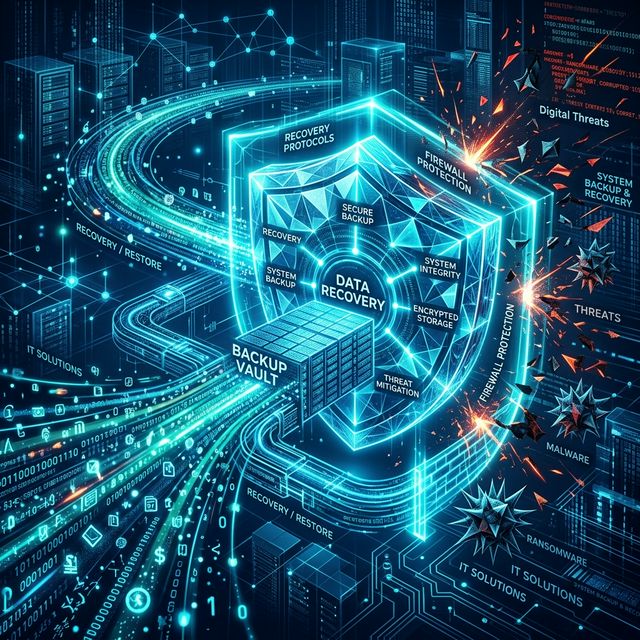
Backup and recovery are part of this security picture as well. Immutable backups, isolated recovery environments, and routine disaster recovery testing matter as much as endpoint protection or firewall rules. A strong defense is not only about stopping intrusion. It is also about keeping operations recoverable under pressure, whether in a centralized data center or a distributed colocation facility. The proper management of data, in all its forms, strengthens the security posture of data centers.
For organizations that depend on remote support and distributed systems, this more disciplined model is a practical necessity.
The center is no longer always central
Another major shift is geographic. Large centralized campuses remain important, but they are no longer the only answer. Many businesses now place capacity closer to users, branch operations, connected devices, or regional compliance zones. That is one reason edge data centers, micro facilities, and distributed colocation sites have become more relevant. The dispersion of data and processing power brings the data center closer to the endpoints where valuable data is generated and consumed.
Latency-sensitive workloads benefit immediately. Applications in logistics, finance, healthcare, manufacturing, and e-commerce often perform better when compute is placed nearer to transaction sources or user demand. Edge capacity can also reduce the amount of data – and the requirement for extensive networking bandwidth – that must travel back to a central site for every decision or data exchange. Distributed data centers not only lower latency but also ensure that crucial data reaches its destination in real time.
This does not mean the traditional core facility disappears. What changes is the model. Centralized sites handle large-scale processing, storage, and governance, while edge sites support speed, continuity, and local responsiveness. The strongest architectures often combine both to maintain network reliability and ensure disaster recovery plans are effective. As data continues to grow in volume and importance, the role of distributed data centers becomes even more central to business strategy.
For IT leaders, this creates a planning challenge that is also an opportunity. The goal is no longer to choose between centralization and distribution. It is to place each workload where cost, performance, control, and resilience make the most sense. With data shaping every decision, the modern data center becomes a critical hub for the distribution and processing of data across multiple environments.
Smarter operations depend on better visibility
Telemetry has become one of the most valuable assets in infrastructure operations. Metrics from servers, switches, storage arrays, cooling systems, backup platforms, and user-facing applications can now be collected and correlated far more effectively than before. That correlation helps teams see cause and effect instead of just isolated alerts, and it can also track bandwidth consumption alongside traditional data. The transparent use of data is transforming the way data centers are managed on a daily basis.
If storage latency rises during a cooling event, or if application errors spike after a network policy change, observability platforms can connect those signals quickly. That shortens diagnosis time and improves change management. It also supports capacity forecasting, which is essential in environments where new workloads or changes in cloud networking can alter demand patterns very quickly. In every modern data center, the strategic analysis of data helps to prevent downtime and maintains operational excellence.
Visibility matters most when it is tied to action. Monitoring that only reports symptoms is useful, but monitoring tied to remediation workflows is far more powerful. When paired with remote administration and preventive maintenance, that model creates a steadier operating environment. Integrating granular data from across the data center’s many sensors means that proactive measures can be taken before issues escalate, keeping data centers secure and efficient.
Providers like CyberNet build their services around that operating style, combining remote support, server administration, networking oversight, colocation management, backup oversight, and security protection to reduce downtime before it disrupts business activity. In doing so, they leverage every bit of data available to optimize performance across all their data centers.
Questions worth asking before a refresh
Modernization tends to go better when it starts with operational questions, not hardware shopping. The strongest plans begin with workload needs, risk tolerance, and growth expectations, then move into architecture, tooling, and overall networking strategy. Every decision made in today’s data center should be informed by reliable data that reflects real-world demands and future projections.
A few questions can quickly sharpen the conversation:
- Workload fit: Which applications need low latency, high density, or strict recovery performance? How does the data generated impact overall performance in the data center?
- What are the power budget and thermal limits, and how does available bandwidth affect networking performance, especially when large volumes of data move across data centers?
- Security model: Is access controlled at the workload level, or mostly at the perimeter, ensuring compliance and network reliability while protecting sensitive data?
- Operations model: Will the environment be managed internally, remotely, or through a blended support structure that leverages cloud, colocation, and distributed data centers, ensuring that every byte of data is accounted for?
These questions matter because the best data center technology is not always the newest feature on a product sheet. It is the technology that fits the business with clarity and discipline. A company running critical services across multiple locations may need better segmentation, stronger backup design, and tighter remote monitoring long before it needs a new flagship server platform or additional disaster recovery provisions. In every data center, a careful analysis of data ensures that improvements truly meet operational needs.
That is where modern infrastructure planning becomes genuinely valuable. When teams connect facility design, automation, security, networking, and service delivery into one strategy – and when every decision is underpinned by robust data – the data center stops being a cost center hidden in the background. It becomes a stronger foundation for growth, continuity, and confidence, ensuring that data and the modern data centers that house it remain resilient in the face of change.
Originally published on CyberNet